
Flexible Working Reform: The Stronger “Right to Request” Coming in 2027
Bereavement Leave Is Becoming a Day-One Legal Right
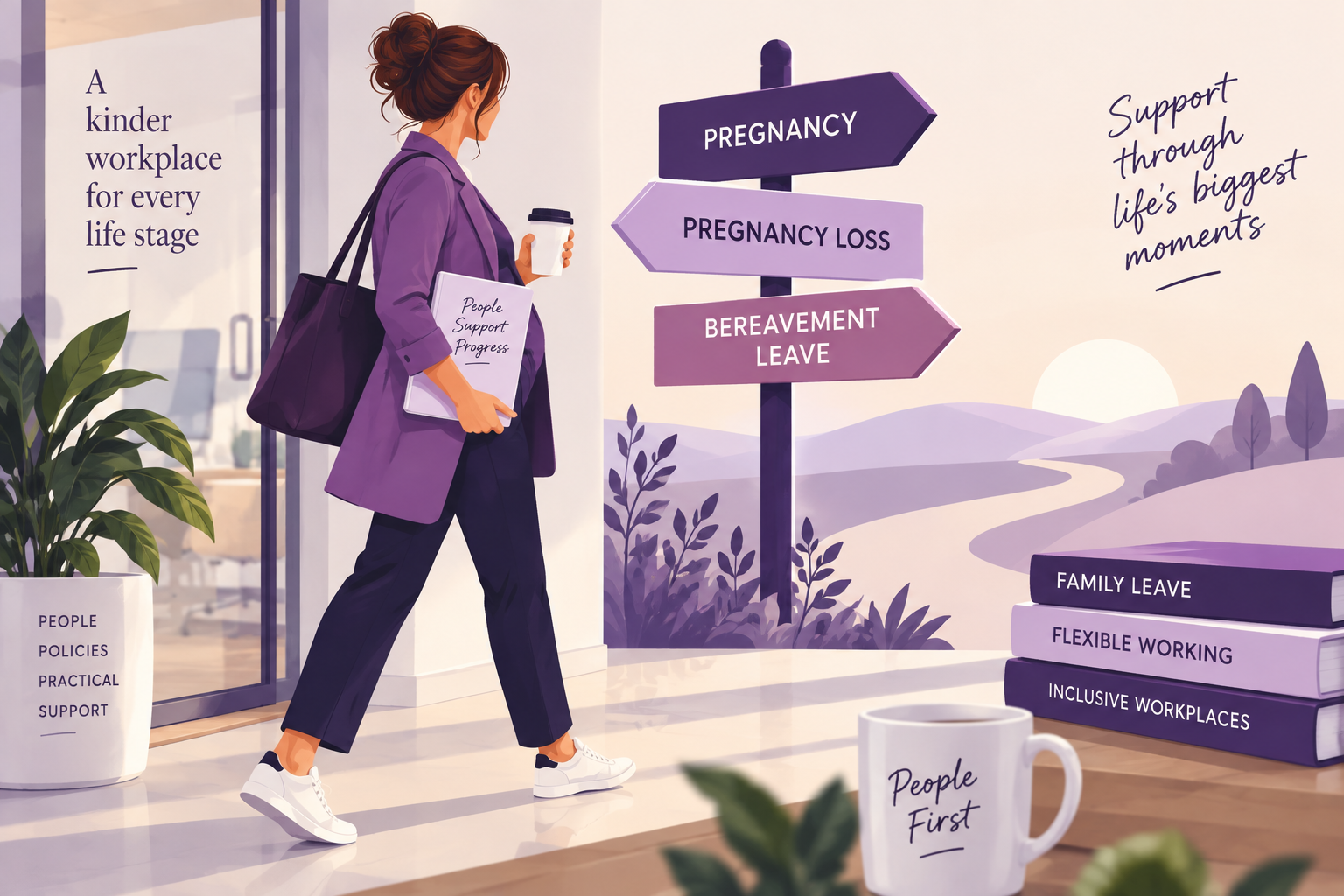
Many employers already offer compassionate leave informally, without it being a specific legal entitlement. That’s changing. A new statutory right to bereavement leave — available from day one of employment, and extended to cover pregnancy loss before 24 weeks — is expected to take effect in 2027. Alongside the flexible working reform we covered earlier this week, this is one of the more people-focused changes still to land from the Employment Rights Act 2025.
A quick explainer of the terms you’ll see
- Statutory bereavement leave — a new, legally guaranteed minimum period of unpaid leave following the death of a close person, separate from any leave an employer currently offers voluntarily.
- Day-one right — available from an employee’s very first day of employment, with no minimum length of service required.
- Pregnancy loss before 24 weeks — in UK law, a loss before 24 weeks of pregnancy is generally categorised differently from a stillbirth (24 weeks or later), which already carries statutory leave rights. This reform extends specific leave rights to loss before that point too.
- Bereaved Partners’ Paternity Leave — a related, already-in-force right (from 6 April 2026) allowing a bereaved father or partner to take up to 52 weeks of paternity leave if the mother or primary adopter dies within the child’s first year.
What’s being introduced
The Employment Rights Act 2025 creates a new day-one right to unpaid bereavement leave for the loss of a close person — not limited to the loss of a child, which already carries separate statutory protections. Early indications suggest this is likely to guarantee at least one week of leave as a legal minimum, though the detailed rules are still to be confirmed.
Critically, this new right is expected to specifically include pregnancy loss before 24 weeks — a category of loss that, until now, hasn’t carried a dedicated statutory leave entitlement in the way that stillbirth and infant loss do.
A consultation on how this right should work in practice closed on 15 January 2026, and the government’s detailed response — including the confirmed minimum leave period and eligibility rules — is still awaited. Implementation is expected sometime in 2027.
How this connects to what’s already changed
This sits alongside a related right that’s already live: since 6 April 2026, Bereaved Partners’ Paternity Leave allows a bereaved father or partner to take up to 52 weeks of paternity leave if the mother or primary adopter dies within the first year of the child’s life. That’s already in force — this new, broader bereavement leave right is the next piece of the same wider family leave picture.
Why this matters for your business
Even with the detail still pending, there’s a clear direction worth planning around:
- Many employers already handle bereavement compassionately on a discretionary basis — this reform turns that into a guaranteed legal minimum, removing inconsistency between how different managers currently handle it.
- Pregnancy loss specifically has often fallen into a grey area for many employers’ existing policies, sitting awkwardly between sick leave, annual leave, and informal compassionate leave. This reform closes that gap with a dedicated right.
- Day-one availability means no qualifying period to check — unlike some other leave entitlements, this won’t require any length-of-service calculation once it lands.
What employers should do now
- Review your current bereavement or compassionate leave policy, particularly whether it currently has any minimum guarantee at all, or relies entirely on manager discretion.
- Check specifically how your policy currently handles pregnancy loss before 24 weeks — this is the area most likely to be inconsistently or unclearly covered in existing policies.
- Make sure managers understand the Bereaved Partners’ Paternity Leave right that’s already in force, since it’s easy to miss given how specific its trigger circumstances are.
- Watch for the government’s consultation response, which should confirm the detailed minimum entitlement and eligibility rules ahead of the 2027 implementation.
- Consider building genuine compassion into your approach now, ahead of any legal requirement — this is an area where getting it right matters to people in a way few other compliance topics do.
How Cheviot HR can help
Handling bereavement well is one of the more sensitive things any employer has to get right, and having clear, consistent policy support makes a genuine difference to how people experience a difficult time. We can review your current approach, help you prepare for the 2027 change, and make sure your policies handle pregnancy loss with the clarity and care it needs.
Get in touch at heidi@cheviothr.co.uk or visit https://cheviothr.co.uk to talk through what this means for your business.
Ready for 1 January 2027?
Our free two-page checklist shows exactly what employers need to sort before the new rules start, from six-month unfair dismissal rights to the new trade union statement.
Get the free checklist