
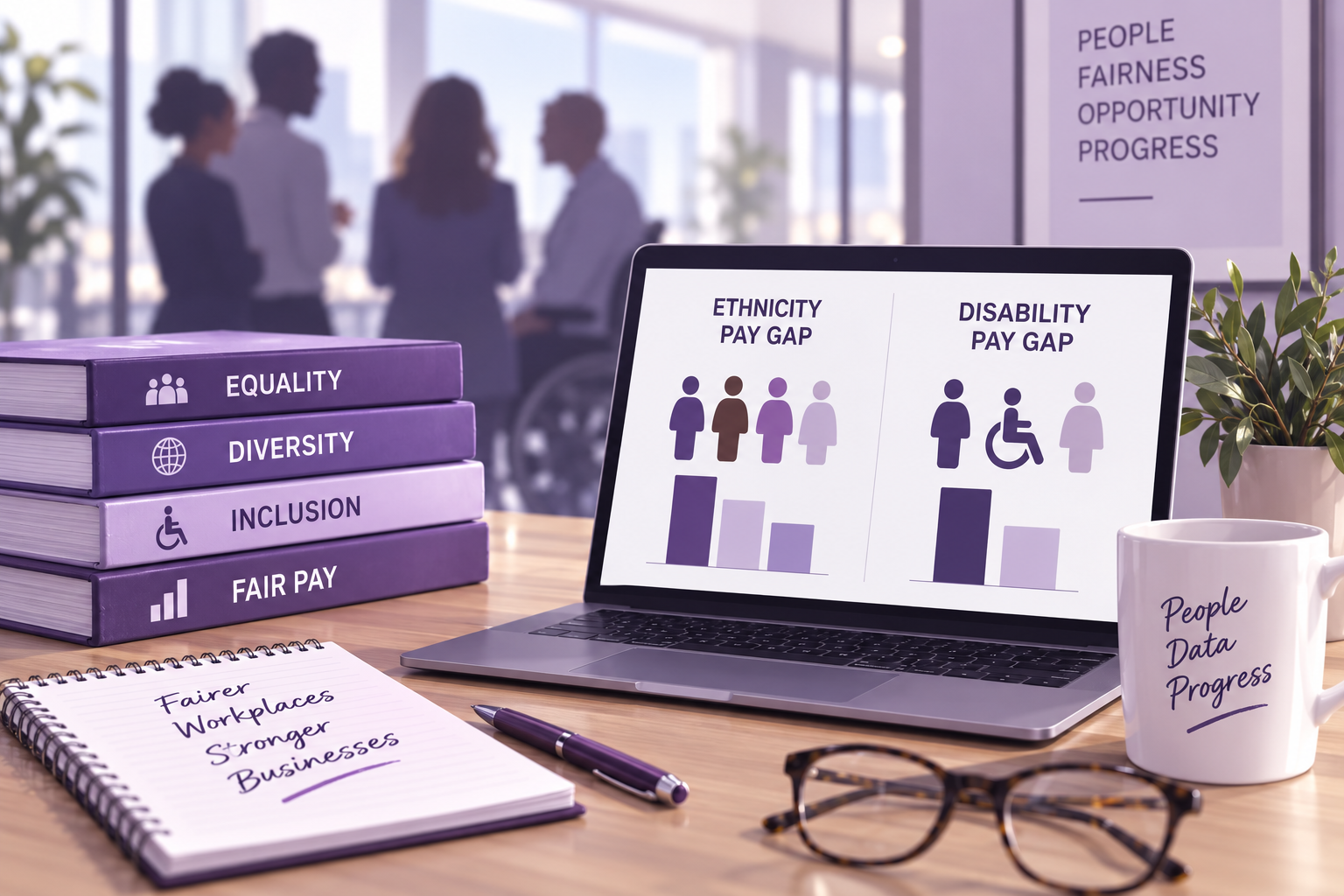
Acas Early Conciliation Now Runs 12 Weeks, Not Ethnicity and Disability Pay Gap Reporting: What’s Confirmed and What Isn’t
Gender pay gap reporting has been a fact of life for large UK employers for years. The government has now confirmed, in principle, that ethnicity and disability pay gap reporting will follow the same path — though, unlike several of the changes we’ve covered elsewhere in this series, the detail here is still some way from settled. Here’s what’s actually known, and where the genuine uncertainty still sits.
A quick explainer of the terms you’ll see
- Gender pay gap reporting — the existing requirement for employers with 250 or more employees to publish figures on the average pay gap between men and women in their organisation.
- Ethnicity pay gap — the equivalent measure comparing average pay across different ethnic groups within an organisation.
- Disability pay gap — the equivalent measure comparing average pay between disabled and non-disabled employees.
- Action plan — beyond simply reporting a figure, a published plan setting out what an employer intends to do to address any gap identified.
- Confirmed “in principle” — the government has stated its intention to introduce this, but the detailed rules, thresholds, and start date haven’t yet been set out in legislation.
What’s actually confirmed right now
Ethnicity and disability pay gap reporting for employers with 250 or more staff has been confirmed in principle by the government as part of the wider Employment Rights Act 2025 reform programme. This sits alongside — and is expected to follow a similar shape to — the mandatory gender equality and menopause action plans also being introduced for large employers, which move from voluntary to mandatory from around spring 2027.
What’s genuinely still open
This is the important caveat: no legislation has been introduced and no firm date has been set for ethnicity and disability pay gap reporting specifically. This puts it in a different category to most of what we’ve covered in this series — it isn’t a confirmed regulation awaiting a commencement order (like the trade union access rights we covered earlier), it’s a stated policy intention still awaiting its detailed legal framework.
Practical questions still to be resolved include exactly how ethnicity and disability data will be defined and categorised for reporting purposes (both are considerably more complex to measure consistently than a gender pay gap), what the reporting threshold will be, and how it will interact with existing data protection obligations around sensitive personal data.
Why this is still worth planning for now
Even without a confirmed date, there’s a strong practical case for getting ahead of this, particularly if you’re a larger employer already handling mandatory gender pay gap reporting:
- Data collection is the hard part, not the reporting. Building reliable, consistently collected ethnicity and disability data — collected sensitively, with genuine staff trust in why it’s being asked for — takes time to establish properly. This isn’t something to build in a rush once a deadline is confirmed.
- This follows the same direction as gender equality action plans. The government’s approach across all these measures has consistently been to move from voluntary to mandatory reporting, then from reporting to requiring an action plan — treat that pattern as a reasonable guide to where this is heading.
- Getting data collection right protects you either way. Even without a legal requirement yet, understanding your own pay patterns across ethnicity and disability is good practice for spotting the kind of unexplained gaps we discussed in our equal pay article earlier in this series.
What employers should do now
- If you’re a large employer (250+ staff), start thinking about data collection now, even informally — voluntary, sensitively handled data gathering now saves a scramble later.
- Review how your existing gender pay gap reporting process works — much of that infrastructure (payroll data extraction, reporting cadence, internal sign-off) is likely to be reusable for these new requirements once confirmed.
- Don’t wait for legislation to start examining your own pay patterns. As with equal pay generally, understanding your position proactively is far better than discovering it through a mandatory report.
- Keep watching for developments. Given the lack of a firm timetable, this is one to monitor rather than act on urgently — but the direction is clear enough to start preparing sensibly.
How Cheviot HR can help
Whether or not this becomes a legal requirement on the timeline currently expected, understanding your organisation’s pay patterns across all protected characteristics is good practice with real business value. We can help you think through a sensible, sensitive approach to data collection now, so you’re not starting from scratch whenever the final rules land.
Get in touch at heidi@cheviothr.co.uk or visit https://cheviothr.co.uk to talk through what this means for your business.
Ready for 1 January 2027?
Our free two-page checklist shows exactly what employers need to sort before the new rules start, from six-month unfair dismissal rights to the new trade union statement.
Get the free checklist